Health
"No Added Sugar" and "Sugar-Free" Are Not the Same
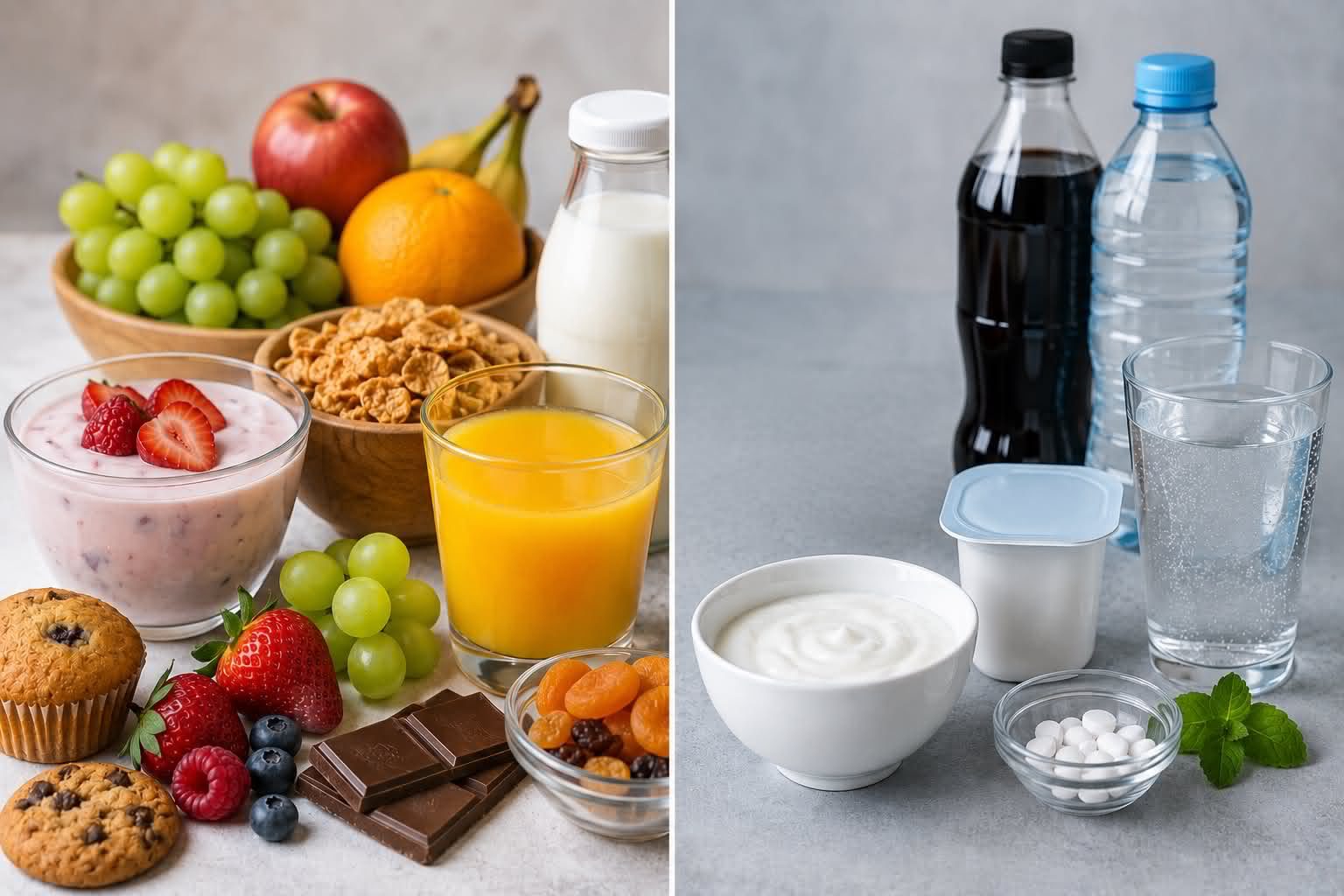
On product packaging, you'll often encounter labels like "sugar-free" or "no added sugar." At first glance, it might seem that both mean the same thing, but in reality, there's a significant difference between them.
Knowing this difference will help you better evaluate a product's composition and avoid being misled by the label alone.
What does "no added sugar" mean?
This label means that no sugar or other sweetener that functions as sugar was added during the production process.
However, this does not mean that the product contains no sugar at all. For example:
- Fruit yogurt;
- 100% fruit juice;
- Apple puree;
- Dried fruit.
In these products, sugar is naturally present, even though nothing additional has been mixed in.
What does "sugar-free" mean?
"Sugar-free" means that the amount of sugar in the product is very small or practically nonexistent.
Such products often contain no sugar at all, or only an insignificant amount that does not exceed the legally permissible limit.
To maintain flavor, manufacturers sometimes use:
- Stevia;
- Erythritol;
- Sucralose;
- Aspartame;
- Acesulfame K;
- Other sweeteners.
Therefore, "sugar-free" does not always mean that the product will not be sweet.
Why is this difference important?
Imagine two products. The first is labeled "no added sugar," and the second is labeled "sugar-free."
The first might contain a fair amount of natural sugar, for example, from fruit or milk. The second might contain no sugar at all but be sweetened with artificial sweeteners.
When evaluating a product, always read:
- The list of ingredients;
- Nutritional value;
- How many grams of sugar are in 100 grams or 100 ml of the product.
This information provides the most accurate answer, not just the marketing phrase written on the packaging.
Natural sugar and added sugar are not the same
Sugar is naturally found in fruits, milk, and some vegetables. In sweets, fizzy drinks, sweet yogurts, cakes, and many processed foods, sugar is added.
International health organizations recommend reducing the amount of added sugar because excessive intake increases the risk of obesity, type 2 diabetes, tooth decay, and other health problems.
Next time you choose a product in the store, don't rely solely on the label - "no added sugar" and "sugar-free" are not the same thing.