Tips
Which Foods Store Better in the Refrigerator and Which Outside?
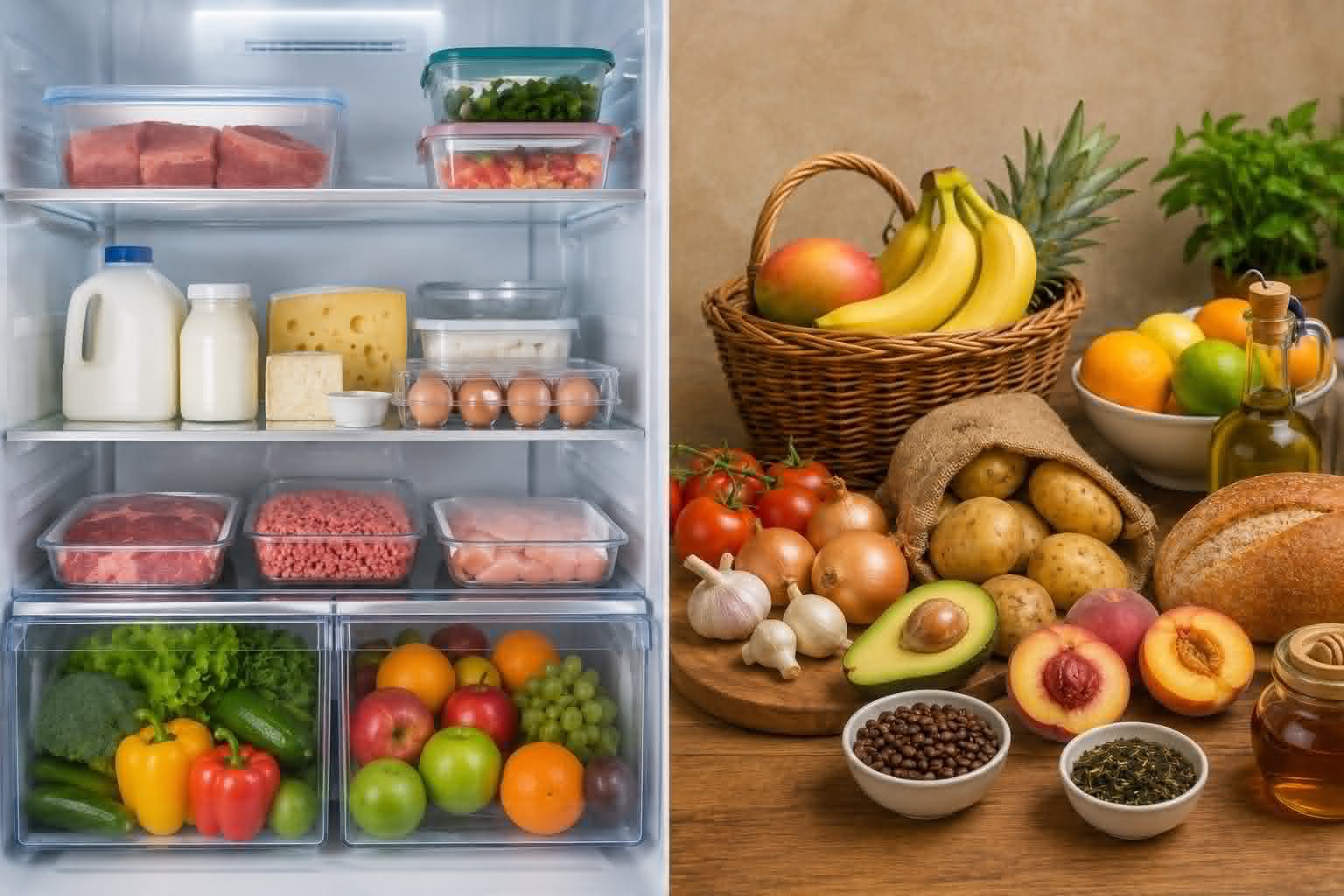
Storing all foods in the refrigerator isn't always a good idea. For some, low temperatures keep them fresh longer, while for others, it can spoil their taste, texture, and quality.
Proper storage not only maintains food quality but also extends its shelf life and reduces food waste.
Foods to Store in the Refrigerator
These products stay safer and last longer at low temperatures:
- Meat and minced meat
- Chicken and turkey
- Fish and seafood
- Milk, yogurt, cheese, butter, eggs
- Opened/unsealed canned goods (transferred to another container)
- Herbs (properly wrapped)
- Broccoli, cauliflower, lettuce leaves
- Mushrooms, carrots
- Cucumbers (if the room is very hot)
- Grapes, berries
Foods Best Stored at Room Temperature
Some products lose flavor or texture more quickly in the refrigerator:
- Potatoes
- Onions, garlic, sweet potatoes
- Pumpkin
- Tomatoes
- Bananas
- Avocados, peaches, apricots, nectarines, plums, mangoes, pineapples (until ripe)
- Citrus fruits
- Apples (can be refrigerated, but also store well at room temperature)
- Honey, olive oil, most vegetable oils
- Coffee, tea, bread
Some Products Require Special Attention
Tomatoes
When stored in the refrigerator, they often lose their aroma and natural texture. It's best to store them at room temperature and only place them in the fridge once they are fully ripe.
Bananas
In a cold environment, the skin quickly turns black. Despite this, the fruit inside is often still good, though its appearance changes quickly.
Potatoes
When stored in the refrigerator, some of the starch converts to sugar, which affects taste and cooking. The best place for them is a dark, cool pantry.
Bread
It dries out faster in the refrigerator. If you won't use it within a few days, it's best to freeze it.
How to Organize Products in the Refrigerator?
Proper food placement is also important:
- Bottom shelf - meat, fish, and minced meat;
- Middle shelves - dairy products and ready meals;
- Top shelf - ready-to-eat foods;
- Drawers - vegetables and fruits;
- Door shelves - sauces, drinks, and other products that require the least consistently low temperature.
Air should circulate freely in the refrigerator, so it's not recommended to overload the shelves.
Storing a product in the right place is often as important as preparing it correctly.