Health
Fruit Juice: Why Is It Not as Healthy as We Think?
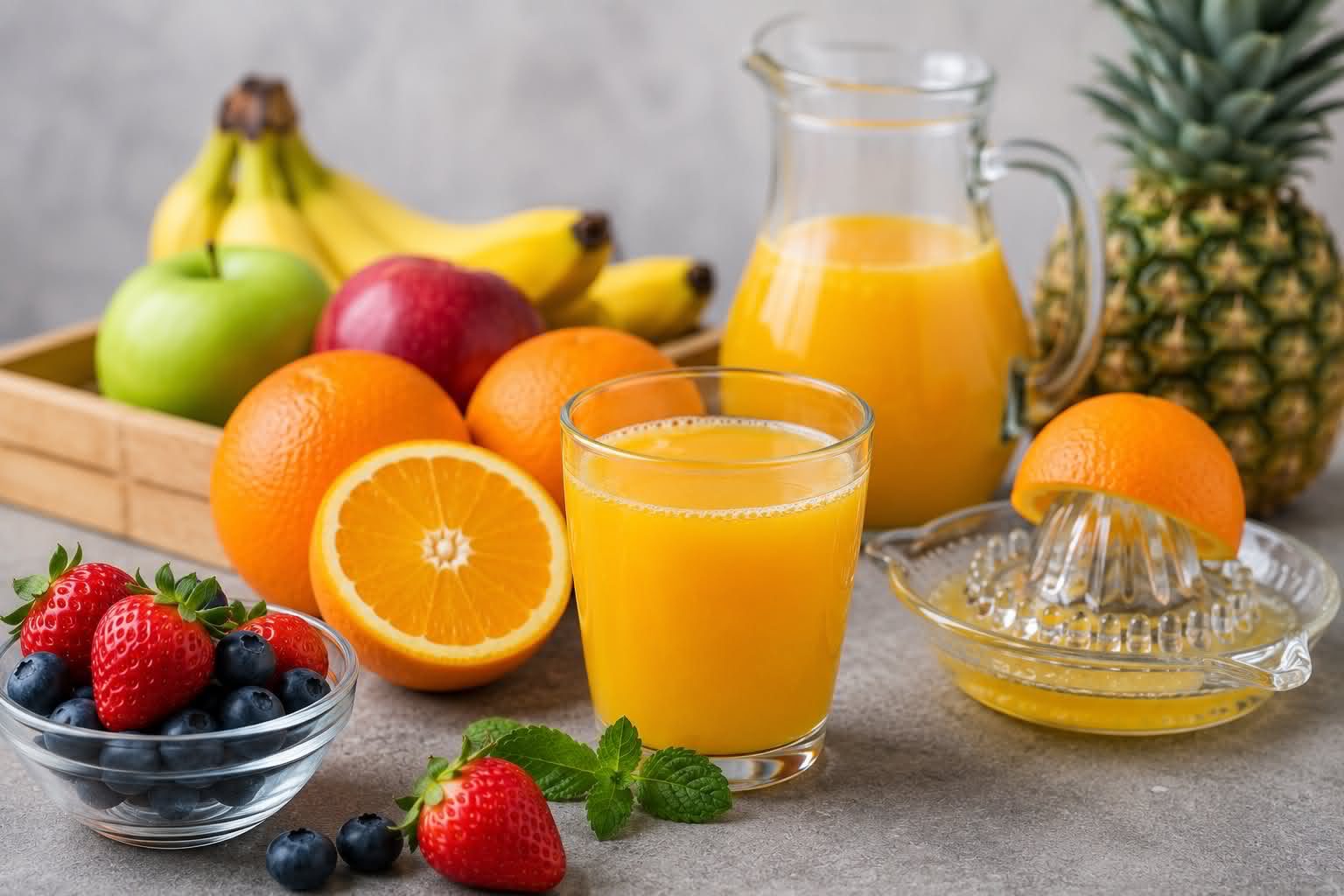
Fruit juice is a healthy choice for many. Especially when it's made at home from freshly squeezed fruit. At first glance, it even seems better - it's natural, contains vitamins, and is clearly superior to fizzy drinks.
But the problem starts right here: fruit juice is perceived as a healthy product, whereas for the body, it often resembles a fast-absorbing sugary drink more than whole fruit.
The Main Difference Between Fruit and Juice
When we eat whole fruit, we get not only sugar but also fiber. Fiber slows down sugar absorption, makes us feel full, and aids digestion.
When juice is squeezed, a large part of the fiber is lost. The glass mainly contains water, fruit sugar, and a certain amount of vitamins.
As a result, the body absorbs sugar faster than it would when eating the same fruit whole.
One Glass of Juice Often Contains Several Fruits
Eating one orange is enough for many. But one glass of orange juice often requires 3-4 oranges.
This means we consume the sugar from several fruits in a very short time, without feeling full at all.
This is why juice can turn out to be much "heavier" in calories and sugar than we think.
Why Doesn't Juice Make Us Feel Full?
Liquid calories don't satiate the body in the same way as food we chew. When we eat fruit, we chew it, consume it slowly, and the stomach feels the volume better. Juice, however, is drunk in a few minutes, and we often feel hungry again soon after.
Therefore, drinking juice daily can become an unnoticed source of excess calorie intake.
Vitamins Are Not a Sufficient Argument
Yes, fruit juice contains vitamins, especially vitamin C. However, this does not mean that drinking it frequently is necessary.
The same vitamins can be obtained much better through whole fruits, vegetables, and a balanced diet - without the rapid intake of excess sugar.
How to Consume Fruit More Correctly?
Better choices include:
- Eating whole fruit;
- Adding fruit to yogurt or porridge;
- Smoothies, where at least some fiber remains;
- Consuming moderate amounts of fruit throughout the day.
If you still love juice, it's better to drink it in small portions, not large glasses. It's also better to consume it with food rather than separately, on an empty stomach.
Fruit juice is not a bad product, but it's not as beneficial as we often think. Therefore, for a daily habit, whole fruit and water are much better choices, while juice should be consumed rarely and in small quantities.