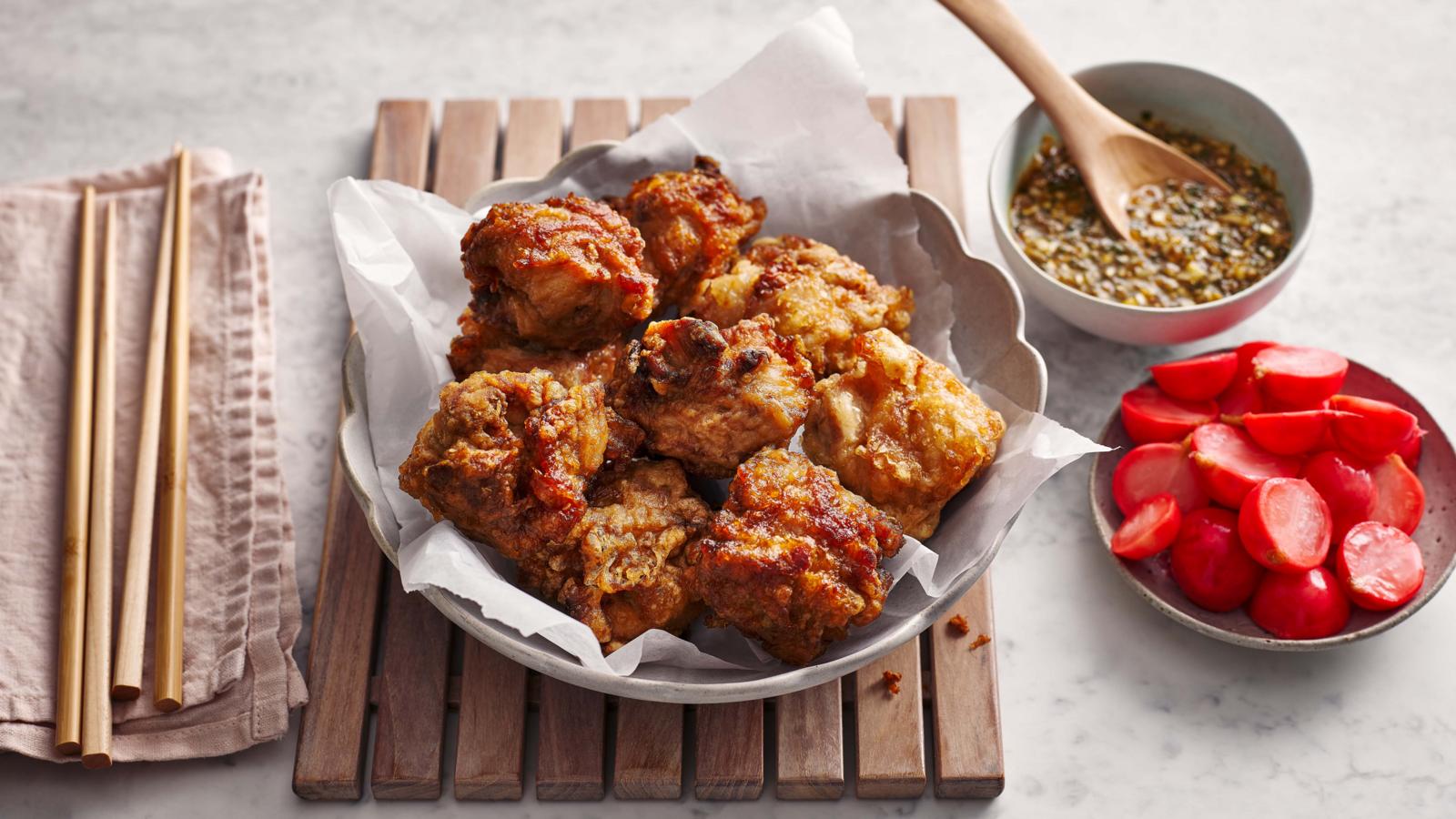
Chicken karaage
Japanese fried chicken, aka chicken karaage, is very popular in Japan. It’s often served with a pickled vegetable, and Shuko’s version also has a simple fresh leek sauce. If you want to make the radish pickle you’ll need to plan two days ahead.
Ingredients
- Rice vinegar60 ml
- Soy Sauce40 ml
- Sake30 ml
- Sesame oil10 ml
- Vegetable oil200 ml
Instructions
10 steps- 1
To make the radish pickle, first soak the kombu in 180ml/6fl oz water overnight.
- 2
Take the kombu out of the water and set aside. Pour the soaking water into a small pan with the rice vinegar, sugar and salt, bring to the boil, then turn off the heat. Stir until the sugar and salt have dissolved, then leave to cool.
- 3
Slice the kombu into thin strips. Submerge the radishes and kombu strips in the brine and leave in the fridge to pickle for at least 8 hours or overnight.
- 4
To make the chicken karaage, squeeze the grated ginger into a bowl (discard the ginger flesh after squeezing). Mix in the soy sauce and sake, add the chicken and marinate for 20 minutes.
- 5
To make the negi sauce, mix the leek, chives and ginger in a small bowl, along with the soy sauce, rice vinegar, sugar and sesame oil.
- 6
Heat the oil in a deep frying pan to 170C. (CAUTION: hot oil can be dangerous. Do not leave unattended.)
- 7
Discard most of the marinade, leaving a little at the bottom of the bowl, and mix in the potato starch. Turn the chicken pieces to ensure they are thoroughly coated. The meat should be a little sticky, but still powdery.
- 8
Put the chicken into the hot oil, one piece at a time, and fry in small batches for 4 minutes until golden brown.
- 9
Using a slotted spoon, lift the chicken out of the oil and set aside for 5 minutes while you increase the temperature of the oil to 190C.
- 10
Fry the chicken for a further 2 minutes until crisp. Drain on a plate lined with kitchen paper, then serve hot, with the sauce and pickles on the side.
Nutrition
1 serving ≈ 283 g
Nutrition values are estimates. - means data is unavailable.
My notes and cooking history
Your notebook is private to your account.
Sign in to keep your cooking notes